
LAWN CARE GUIDE
Watering Done Right
The complete guide to keeping your Charlotte-area lawn green, healthy, and properly hydrated — answered by 30 years of expertise.
QUICK ANSWER
Most established Charlotte-area lawns need 2-3 watering sessions per week,
~1 inch total, early morning.
Adjust based on temperature, rainfall, and your turf type.
Read on for the full guide ↓
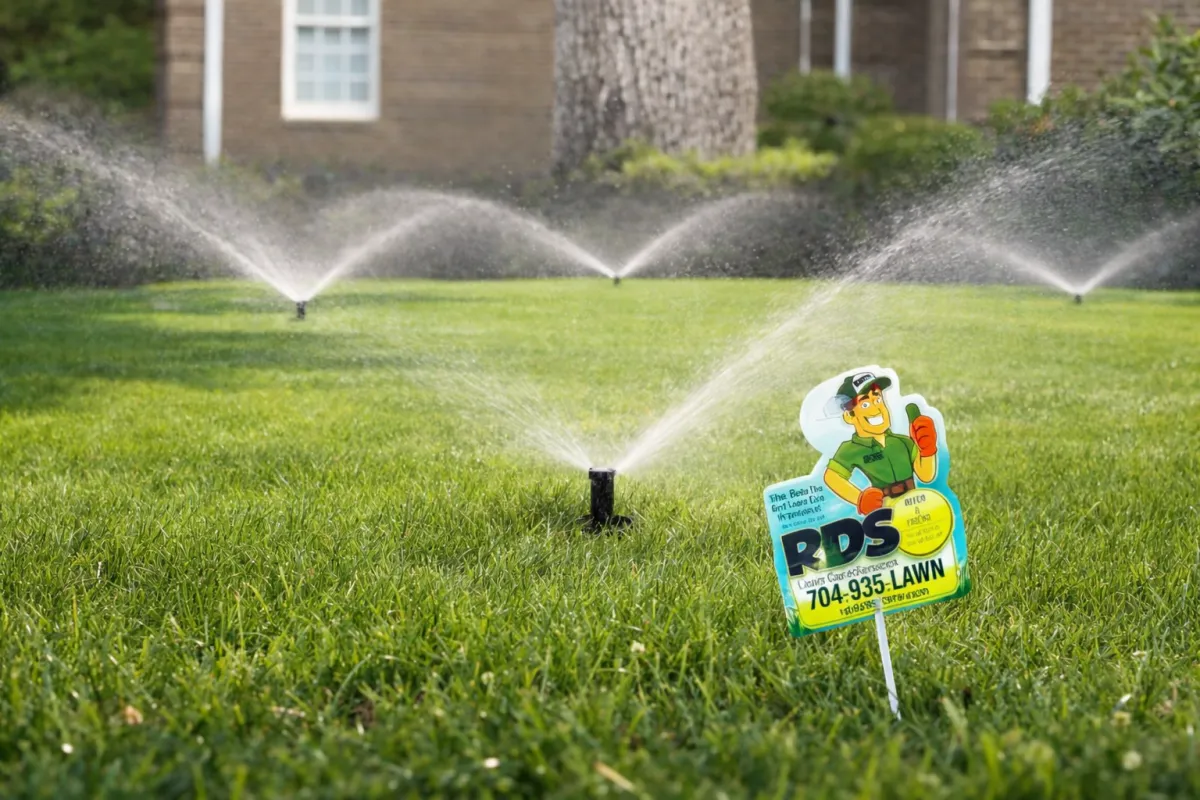
One of the most common questions we receive is:
“How much should I be watering my lawn?”
The honest answer is—there isn’t a one-size-fits-all schedule. Every lawn is different, and factors like rainfall, temperature, soil type, and sun exposure all play a role.
While we’d love to provide a single, exact watering schedule for everyone, it’s simply not realistic. Instead, we’ve put together a comprehensive guide to help you better understand your lawn’s needs so you can make the right adjustments throughout the season.
We know this is a lot of information—
but it’s important,
and it will make a big difference in the health of your lawn.
Why Watering Matters
Water is one of the most important factors in maintaining
a healthy, green lawn.
The amount and frequency of watering depends on several key factors:
Temperature
Rainfall
Turf type
Soil conditions
Sun exposure
Shade
Age of the lawn
Because of these variables, proper watering requires some
observation and adjustment over time.
Key Watering Principles
Avoid overwatering
Too much water keeps roots shallow, making your lawn more vulnerable to heat and drought. It can also lead to fungal issues and soggy soil.
Avoid underwatering
Too little water can cause your lawn to go dormant (turn brown). Most turf can recover, but extended dry periods can lead to permanent damage.
Aim for balanced soil moisture
Your goal is soil that is consistently damp—not muddy and not dry or cracked. Think of the moisture level of a well-watered potted plant.
Understand your soil
Many lawns in our area have clay-heavy soil. This means water may run off when dry, but once absorbed, it tends to hold moisture longer. Adjust frequency and duration accordingly.
Best Time to Water
Water early in the morning whenever possible. This allows water to soak into the soil while giving the grass blades time to dry,
reducing the risk of fungus.
Evening watering should be avoided unless absolutely necessary.
Fescue Lawns (Cool-Season Turf)
Fescue thrives in cooler temperatures and begins to struggle when temperatures exceed 85°F.
It may turn brown during heat, but this does not mean it is dead.
With proper watering, it can recover within a few weeks.
General Watering Guidelines (Established Lawns)
Below 70°F (Nov–March):
No irrigation typically needed.
70–80°F with normal rainfall (April):
Water 2–3 times per week
70–80°F with low rainfall (May):
Water 3–4 times per week
Above 85°F (Summer):
Water every other day (avoid daily watering if possible)
Timing per zone:
Rotating heads: 25 minutes
Fixed heads: 15 minutes
Hose/sprinkler: 25–30 minutes
Fall Seeding (Most Critical Time)
New seed must stay consistently moist to germinate.
Days 1–15: Water 2x daily
Days 15–20: Water daily
Days 20–30: Water every other day
Adjust as needed to keep soil damp—not saturated.
Bermuda & Zoysia Lawns (Warm-Season Turf)
These grasses thrive in heat and are more drought-tolerant but still require consistent watering.
Active growth: April–October
Dormant (yellow): After first frost until spring
General Watering Guidelines (Established Lawns)
Below 70°F:
No watering needed (dormant period)
70–80°F with normal rainfall (April):
Water 2–3 times per week
70–80°F with low rainfall (May):
Water 3 times per week
Above 85°F (Summer):
Water every other day
Timing per zone (same as fescue):
Rotating heads: 25 minutes
Fixed heads: 15 minutes
Hose/sprinkler: 25–30 minutes
Final Thoughts
The most important takeaway: watch your lawn.
Use these guidelines as a starting point, but adjust based on what you see:
If the soil is too wet → reduce watering
If the soil is too dry → increase watering
Consistent, proper watering is essential for getting the best results from your lawn care program.

30 Years in Business

Licensed & Insured

Local Experts

Reliable Service
Ready for a Beautiful Lawn?
Get your free quote today — and come home to a lawn you’ll love.

Facebook
Instagram
Youtube